In Nepal, whenever someone plans to buy a bike, the first question is almost always about mileage.
“How much mileage does it give?” Or “Yo bike le Kati mileage dincha.”
That question sounds simple. But behind it lies something much deeper.
Because Mileage is not just a number printed on a brochure. It is directly connected to your monthly fuel expense, your five-year ownership cost, and even the type of roads you ride every day. In fact, it is one of the few things that you need to understand before buying bikes and scooters in Nepal.
So, before trusting any mileage number, let us first understand what mileage actually means and how it really works on Nepali roads.
What is Mileage? Mileage Bhaneko Chai K ho?
Mileage simply means how far a vehicle can travel using a fixed amount of energy. Nepali ma bhannu parda ek litre petrol ma or ek choti charge garesi tapai ko gadi kati kilometre chalcha, yehi nai ho Mileage bhaneko.
For petrol bikes, mileage is measured in kilometers per litre. If a bike gives 50 kmpl, it means it can travel 50 kilometers on one litre of petrol under certain conditions.
For electric scooters, mileage is usually called range. Instead of petrol, they use a battery. So when a scooter claims 90 kilometers per charge, it means under ideal conditions, the scooter can travel for 90 kilometers before needing a recharge.
So whether petrol or electric, mileage tells you one important thing. How efficiently your vehicle uses energy.
And that efficiency is what controls your daily expenses.
How Mileage Is Calculated in Petrol Bikes? (Petrol Bike Mileage Calculator)
Now, let us understand how mileage is actually calculated.
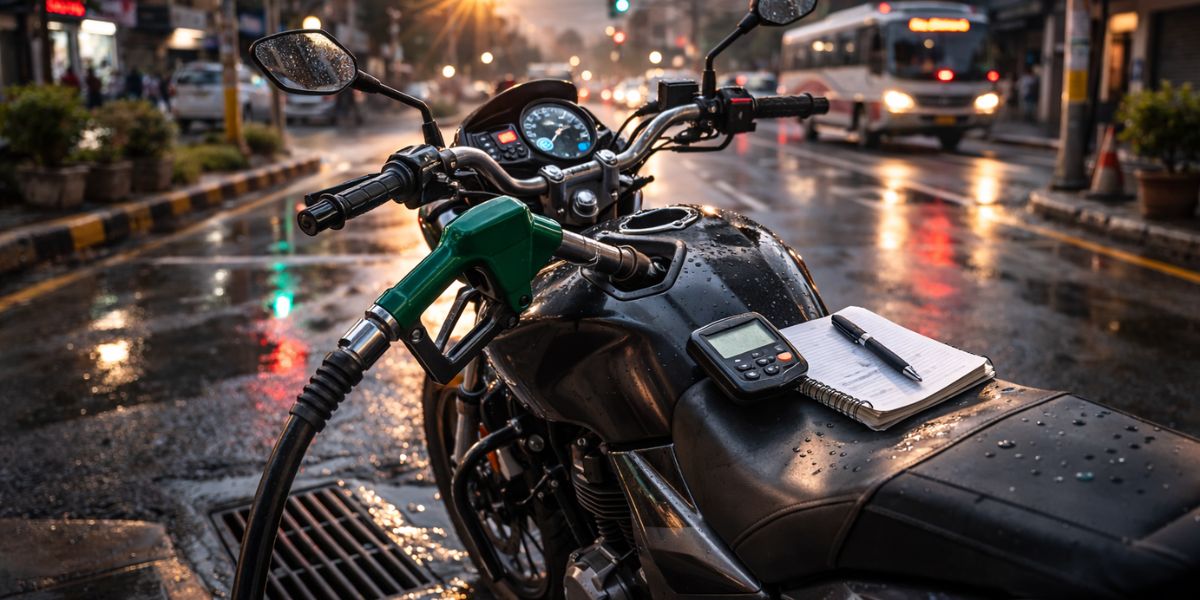
Imagine you fill your bike with exactly one litre of petrol. Then you reset the trip meter to zero and start riding. When that one litre finishes, you check how many kilometers you covered.
If you traveled 52 kilometers, your mileage is 52 kmpl.
But in real life, people do not usually ride with just one litre. Instead, they fill the tank full, ride for several days, and then refill it again. At that time, they check two things. How many kilometers were covered and how many litres were added?
Mileage is calculated like this:
Total kilometers traveled divided by total litres used.
For example, if you rode 260 kilometers and refilled 5 litres of petrol, your mileage is 260 divided by 5. That equals 52 kmpl.
Mileage Calculator
You can use the mileage calculator above to check your own bike’s real mileage. Just enter the total distance you traveled and the total fuel you refilled. The calculator will show your actual kmpl and how much it costs per km.
However, remember this carefully. Even after calculating properly, the mileage number will change depending on traffic, road conditions, load, riding style, and even tyre pressure.
That is why two riders with the same bike can still get different mileage results.
Calculating the Mileage of an Electric Scooter (EV Mileage Calculator)
Mileage Calculator
The mileage of an electric scooter doesn’t depend on petrol, as it doesn’t use petrol. (Obviously!!).
Rather, the mileage of an electric scooter is calculated by dividing the total charging cost by the total kilometers you can ride on one full charge.
Matlab, tapai ko scooter le ek full charge ma kati kilometer chalcha bhanne kura ho. Aba cost kasari calculate garne?
Manau battery 3 unit ko cha. Electricity ko rate NPR 10 per unit cha. Full charge ko cost bhayo 3 multiplied by 10, which is NPR 30.
Yedi tapai ko scooter le 75 kilometer chalcha bhane, 30 divided by 75 equals around NPR 0.40 per kilometer.
Calculator ma battery unit, bijuli rate, ra real range halnu hos. Tapai ko cost per kilometer turuntai dekhaucha.
EV Mileage Calculator
Why Showroom Mileage Is Different From Real Mileage
Now this is where many Nepali buyers get confused.
Showroom mileage is tested in controlled conditions. That usually means smooth road, steady speed, no traffic, and no sudden braking.
But Nepali roads are rarely like that.
Euta example heram hai ta, yedi tapai bihana ko 9 baje Kalanki dekhi Koteshwor jadai hununcha bhane, tapai lai ni thaha hola traffic kati ko huncha. Tyo road ma kaile speed badaune ta kaile ghataune ta kaile ikasi stop garne garda, engine le kehi extra petrol khana sakcha. Ra extra fuel khane bitikai mileage ta ghati halcha.
On the other hand, if you ride from Kathmandu to Chitwan on a smooth highway at steady speed, your bike may give better mileage because you are not braking and accelerating frequently.
So the same bike can give different mileage depending on the road conditions.
How Different Nepali Roads Affect Mileage
Let us look at three different real scenarios.
First, imagine a rider who travels daily inside the Kathmandu valley. His route includes Ratna Park traffic, narrow roads in New Road, and frequent signals. Because of constant braking and low-speed movement, his bike consumes more fuel. His real mileage will be lower than the claimed mileage.
Second, imagine a rider who travels regularly on the highway between Bhaktapur and Banepa. His speed is steady, traffic is lighter, and braking is less frequent. His mileage will be closer to the showroom figure.
Third, imagine someone riding daily uphill from Thankot to Chandragiri or from Sanga to Dhulikhel. Uphill riding requires more engine power. The engine has to work harder. More power means more fuel consumption. So mileage drops significantly in such areas.
Similarly, riders in places like Tansen, Besisahar, or Daman, where roads include long, steep climbs, will always get lower mileage compared to flat Terai roads like Chitwan or Biratnagar.
So road type plays a major role in real mileage.
How Engine CC Affects Mileage
Engine size also directly affects fuel consumption.
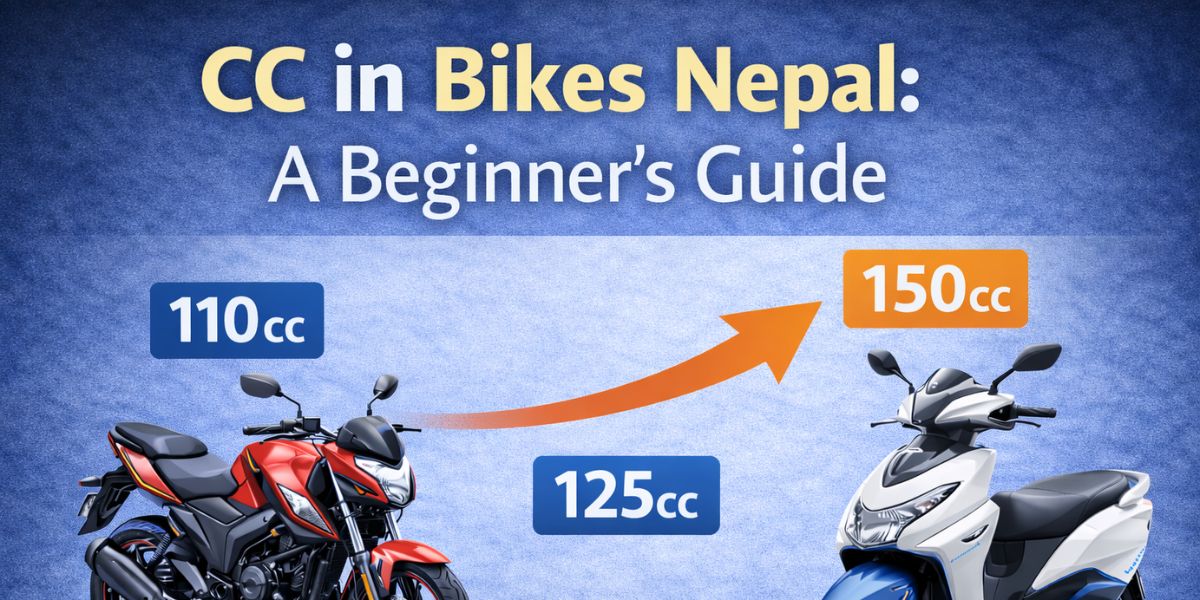
Smaller engines like 110cc or 125cc burn less fuel because they produce less power. Larger engines like 150cc burn more fuel because they are built to produce more power.
In real Nepali traffic, a 110cc scooter may give around 45 to 55 kmpl. A 125cc bike may give 55 to 62 kmpl. A 150cc bike may drop to around 35 to 45 kmpl.
So if your daily use is only city commuting, choosing higher CC means spending more on petrol without using the extra power fully.
How Weight Affects Mileage
Now, let us talk about something many people ignore. Weight.
The heavier the bike, the more fuel it consumes.
If you compare a lightweight 110cc scooter and a heavier 150cc bike, the heavier bike requires more energy to move.
Similarly, if you ride with a pillion passenger every day, your mileage reduces because the engine works harder to carry extra weight.
Even carrying heavy bags regularly can slightly reduce fuel efficiency.
This is why two riders using the same bike can get different mileage. One rides alone. The other rides with pillion and luggage daily.
Weight matters more than most people realize.
How Riding Style Changes Mileage
Now imagine two friends riding the same 125cc bike.
The first rider accelerates smoothly, maintains steady speed, and avoids sudden braking.
The second rider accelerates aggressively, brakes hard, and rides at high RPM.
Even though they use the same bike, the second rider will get lower mileage.
Smooth riding saves fuel. Aggressive riding increases fuel consumption.
So mileage is not only about the engine. It is also about behavior.
Electric Scooter Mileage Reality in Nepal
Electric scooters are slightly different, but the logic is similar.
A scooter may claim 100 kilometers per charge. But if you ride uphill daily from Sitapaila to Balaju, the battery drains faster. If you ride with a pillion in hilly areas like Sankhu or Pharping, the range reduces.
Cold winter mornings in Kathmandu can also slightly affect battery efficiency.
So electric mileage depends on road slope, load, speed, and riding habits, just like petrol bikes.
How to Choose the Right Mileage for Your Daily Life
Instead of asking which bike gives highest mileage, ask this.
How many kilometers do I ride daily?
If you ride 10 to 15 kilometers daily inside city, even 45 kmpl may be sufficient.
If you ride 30 to 40 kilometers daily, higher mileage saves significant money over time.
Also consider road type. If your route includes steep climbs daily, choose engine that handles hills comfortably instead of focusing only on mileage number.
Mileage must match your road condition and riding pattern.
Why Mileage Matters for Long Term Cost
Now let us calculate simply.
If you ride 25 kilometers daily, that becomes more than 9,000 kilometers per year.
If your bike gives 55 kmpl instead of 40 kmpl, the yearly petrol difference becomes noticeable.
Over five years, that difference can become tens of thousands of rupees.
So mileage is not just a marketing number. It directly affects your long term ownership cost.
Mileage in Nepal is affected by traffic, hills, weight, riding style, engine size, and maintenance.
If you understand how these factors work together, you will make a smarter decision and avoid regret later.
If you want to see how mileage connects with loan, insurance, and the total five-year ownership cost, you can read our complete buying guide, where everything is explained clearly.
FAQs
What is mileage in bikes in Nepal?
Mileage means how many kilometers a bike can travel using one litre of petrol. For example, if a bike gives 50 kmpl, it means it can travel 50 kilometers with one litre of fuel. In Nepal, mileage is important because petrol prices and daily traffic directly affect long-term ownership cost.
How is bike mileage calculated?
Mileage is calculated by dividing total distance traveled by total fuel used. For example, if you travel 300 kilometers and refill 6 litres of petrol, your mileage is 50 kmpl. This method gives more accurate real-life mileage compared to showroom claims.
Why is showroom mileage different from real mileage?
Showroom mileage is tested in ideal conditions like smooth roads and steady speed. In Nepal, traffic, hills, braking, and road quality reduce fuel efficiency. That is why real mileage is usually lower than the company’s claimed number.
What is good mileage for bikes in Nepal?
For daily city use, 50 to 60 kmpl is considered good mileage in Nepal. Scooters and 125cc bikes usually give higher mileage, while 150cc bikes offer lower mileage but more power. The best choice depends on your daily distance and road condition.
How much mileage does a 125cc bike give in Nepal?
Most 125cc bikes in Nepal give around 50 to 60 kmpl in real conditions. However, mileage may decrease in heavy Kathmandu traffic or hilly areas. Smooth highway riding often improves fuel efficiency.
Does engine CC affect mileage?
Yes. Smaller engines like 110cc and 125cc consume less fuel. Larger engines like 150cc and above use more petrol because they produce more power. Choosing the right CC based on your usage can save significant fuel costs.

Bishad Kandel has been writing for the past three years across different niches, combining creativity with research-driven insights. With a degree in Information Technology, he brings a strong background in data analysis to his work, ensuring every blog he writes is factual, engaging, and meaningful. His approach blends storytelling with evidence, making complex topics easier to understand for readers.