
Nepal is in the middle of one of its boldest political shifts.
With Sushila Karki stepping in as the first female Prime Minister, the message is pretty clear. This interim cabinet is built on competence and past results, not on who owes whom a favor.
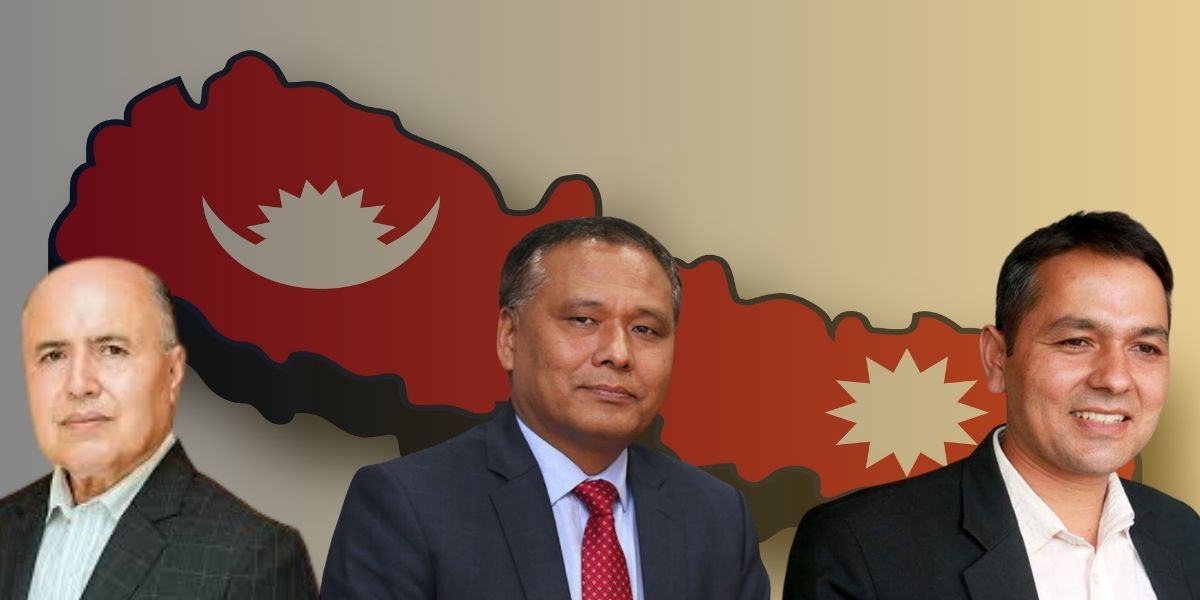
At the heart of this team are three names the public already knows: Rameshore Khanal, Kulman Ghising, and Om Prakash Aryal. Different backgrounds. Different toolkits. One common thread.
They get things done. Khanal is the money brain. Ghising is the power grid fixer. Aryal is the rule of law guy. Their arrival brings hope and a lot of questions about what comes next.
This breakdown looks at where they come from, what they have actually delivered, and the obstacles waiting for them now.
Rameshore Khanal As Finance Minister
Rameshore Khanal returns as Finance Minister at a time when the economy needs steady hands. This financial wizard has an ACMA from India and an MBA and a Commerce degree from Tribhuvan University.
Furthermore, he also trained at the ILO Center in Turin and has spent years around World Bank and IMF tables. So he knows the global playbook and the local reality.
Talking about his experience, his most talked-about work was as Finance Secretary from 2008 to 2011. In just three years, Nepal’s revenue to GDP went from 13.2 percent to 15.3 percent. That was not luck. He pushed real reforms.
During his tenure, he moved treasuries off paper and into Oracle based digital systems, expanded electronic processing to 45 districts.
Besides that, he also tightened the Medium Term Expenditure Framework so annual budgets actually linked to multi year plans.
All in all, he cleaned up budget manuals and guidelines so ministries stopped tripping over each other and money flowed where it should.
Of course, that kind of discipline can clash with politics. In 2011, he resigned after a fight over a supplementary budget that skipped proper process. Supporters called it integrity. Critics said he could have managed the politics better.
Now as an interim prime minister, he has to cool inflation, narrow trade gaps, and support recovery. He has the know-how. The real test is whether he can protect transparency and still work the room with political actors who are not always fans of rules.
Kulman Ghising In The Ministry of Physical Infrastructure, Transport, and Urban Development
Kulman Ghising is the name people shout when they talk about ending load shedding. He blends engineering roots with management training.
A bachelor’s in electrical engineering from India, a master’s in power systems from Nepal, and an MBA from Pokhara University.
When he took over the Nepal Electricity Authority in September 2016, the country was stuck in up to 18 hours of power cuts. In about 20 months, scheduled load shedding was gone. That felt like magic at the time.
His strategy was simple but smart. Use what you have better. He stopped preferential supply to a few, reallocated power fairly, revived idle plants, modernized the grid, and ran public awareness drives to smooth peak hour demand. No grand speeches. Just operational discipline.
The NEA story is also a financial one. It carried losses of Rs 34.61 billion. Under Ghising, it paid down debt and posted about Rs 5 billion in profit. Public enterprises can work when they are run like real businesses.
Furthermore, during his tenure, Nepal shifted from a regular importer to a net exporter of electricity. By August 2025, it had permission to export 1,130.9 MW, including 40 MW to Bangladesh via India. In fiscal year 2024/25, exports earned Rs 17.45 billion, with a net surplus of Rs 4.53 billion. That is a genuine pivot.
However, it has not been a smooth sailing for him.
In March 2025, he was removed with ten official allegations on the table, from unauthorized talks abroad to weak recovery of industry dues. The public protested in support, but none of the authorities listened. Supporters said politics. Critics said hype and selective storytelling. Some also pointed out winter stability often depended on imports from India.
As Energy Minister, his job is to keep building capacity, make governance cleaner, and win back trust while pushing new trade and grid upgrades. Results with transparency. That is the combo he needs.
Om Prakash Aryal is nearly confirmed as Home and Law Minister
Om Prakash Aryal brings a different type of power. Not wires and budgets. Institutions and rights. He grew up in Gulmi, planned to study music, then chose law. This experienced individual holds an LLM in Constitutional and Human Rights Law from Nepal Law Campus and has spent over 25 years arguing for accountability.
His biggest legal win was against Lokman Singh Karki, then chief of the CIAA. Aryal filed a writ in 2013. In January 2017, the Supreme Court said Karki lacked the moral character and experience required and removed him. That verdict became a symbol of checks and balances actually working.
He also challenged the 2013 move to make Chief Justice Khil Raj Regmi the interim Prime Minister, warning it blurred separation of powers. The appointment proceeded, but the case raised significant constitutional concerns.
Across his career, Aryal has filed more than 50 public interest petitions, from habeas corpus during the conflict years to challenges against questionable ordinances. He is known for persistence and a straight spine.
Now comes a new challenge. Home Minister is not a courtroom. It is administration, policing, disaster response, local governance, and a lot of coordination. Aryal’s legal clarity is a strength, but he will need collaborative skills to turn rulings into working systems.
Why This Team Matters
These three signal a clear shift. Skills first. Delivery first. If it clicks, the country stands to gain.
- Khanal can tighten budgets, grow revenues, and rebuild fiscal credibility.
- Ghising can secure reliable power and expand regional energy trade.
- Aryal can reinforce the rule of law and push back against impunity.
What Could Trip Them Up
Politics will push back. Old networks do not disappear overnight. Public patience is limited and expectations are high. Success depends on three things that are easy to say and tough to do.
- Work together around a shared plan with clear milestones.
- Keep decisions transparent so people can see what is happening.
- Hold the line on process even when shortcuts look tempting.
If they deliver, Nepal could turn a page where competence beats patronage and accountability becomes the norm. If they stall, it will feel like another missed moment. For now, the country has a rare window. Let the work speak.
Also read: Problem with Nepal’s Constitution Assembly: How the System Fuels Instability and Corruption, and Making Constitution of Nepal Using AI

Bishad Kandel has been writing for the past three years across different niches, combining creativity with research-driven insights. With a degree in Information Technology, he brings a strong background in data analysis to his work, ensuring every blog he writes is factual, engaging, and meaningful. His approach blends storytelling with evidence, making complex topics easier to understand for readers.
Good article. Ghising and Khanal appear to be excellent picks.
Aryal really scares me. While his integrity, legal skills, and commitment to rule of law might be excellent, he seems to have little experience to run the home ministry.
That ministry is the most critical and difficult to run. Aryal will have to run a police force, deeply politicized at the top and the middle, to maintain security during a very critical time for the country. The old political parties will be competing in this election, which they should be allowed to do, and will try to use their goons to get votes and ballots, which cannot be allowed to happen. And the Home Minister needs to maintain security using a compromised police force, while respecting political rights.